Is Soft Washing Safe for Delicate Siding and Painted Surfaces?
Get a cleaner, better-looking property today
The Direct Answer
Yes — soft washing is specifically designed for delicate siding and painted surfaces and is the method recommended by most siding and paint manufacturers. Unlike high-pressure washing, which can strip paint, crack stucco, drive water behind siding, or damage wood fiber, soft washing uses low-pressure water delivery and biodegradable cleaning agents that gently remove organic growth without mechanical force. When performed by a trained technician using the correct solution concentrations, soft washing is completely safe for vinyl siding, painted wood, cedar shake, stucco, EIFS, and fiber cement siding.
Why High Pressure Damages Delicate Surfaces
Pressure washers operating above 1,500–2,000 PSI can void siding warranties, crack caulk seals around windows and doors, drive water into wall cavities, peel paint from wood trim, and erode the surface of soft brick or stucco. Homeowners who rent consumer pressure washers and attempt to clean their own siding frequently cause this kind of damage — which is both expensive to repair and often not covered by homeowner's insurance.
How Soft Washing Works on Siding
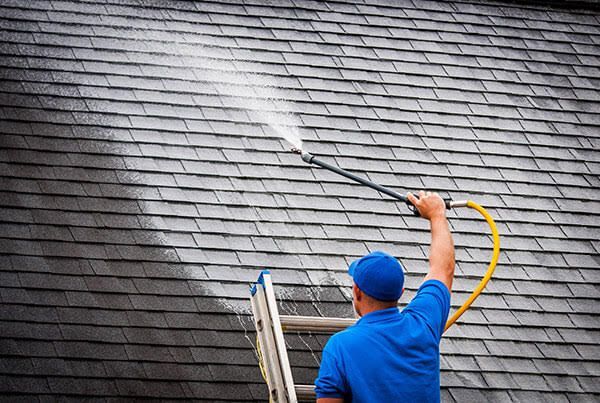
In a soft wash system, a diluted solution of sodium hypochlorite (bleach) and surfactant is applied at low pressure — typically under 500 PSI, well below the threshold of damage for any cladding material. The solution dwells on the surface for a controlled period, breaking down and killing mold, algae, mildew, and lichen at the cellular level. It is then rinsed away at low pressure, along with all organic residue. The result is a thoroughly clean surface that stays clean significantly longer than mechanical pressure washing.
What Surface Types Can Be Soft Washed?
Virtually any exterior surface that holds organic growth is a candidate for soft washing. This includes vinyl siding, painted wood siding, LP SmartSide, HardiePlank fiber cement, cedar shake, brick (including painted brick), stucco, EIFS, wood fences, pergolas and decking, and roofing shingles. Roofs in particular benefit enormously from soft washing — the only method approved by the Asphalt Roofing Manufacturers Association (ARMA) for cleaning shingle roofs.
Are Soft Wash Chemicals Safe for Landscaping?
When applied by a trained professional at the correct dilution, soft wash solutions are not harmful to established landscaping. Technicians wet down surrounding plants before and after application as a precaution, and biodegradable surfactants break down quickly. Concentrated solutions applied carelessly by unqualified operators can cause plant damage — another reason to hire an experienced professional rather than a day laborer with a sprayer.
Waymore Property Services — Soft Washing in Dallas–Fort Worth
Waymore Property Services provides professional soft washing for residential homes and commercial properties throughout DFW. Our technicians are trained in solution concentrations appropriate for every surface type and handle all pre-treatment of landscaping before application. Call 469-290-7555 or request a free estimate online.
Frequently Asked Questions
Q: Will soft washing damage my vinyl siding?
A: No. Soft washing operates well below the pressure levels that cause siding damage. It is the cleaning method recommended by vinyl siding and fiber cement manufacturers and is safe for all common residential cladding materials.
Q: Is soft washing the same as pressure washing?
A: No. Soft washing uses low-pressure water delivery (under 500 PSI) combined with biodegradable cleaning solutions, while pressure washing relies on mechanical water force (1,500–4,000 PSI). Soft washing is designed for delicate surfaces; pressure washing is suited for hard surfaces like concrete.
Q: Can soft washing damage paint?
A: No — when performed correctly, soft washing does not affect paint adhesion or integrity. High-pressure washing, on the other hand, can and frequently does strip paint from wood siding, trim, and painted masonry.
